Live up to the light thou hast
“Live up to the light thou hast, and more will be granted thee.”
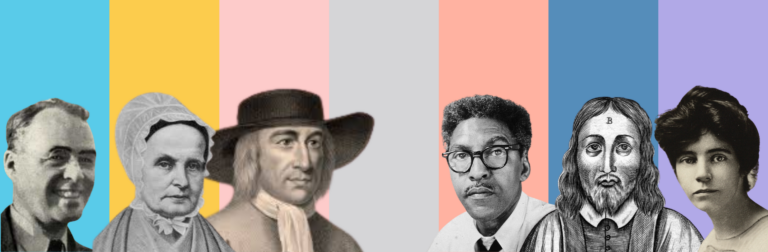
“Live up to the light thou hast, and more will be granted thee.”
“The people who have experienced themselves united with God’s will are drawn to manifest it as love in the world.”
“I ask no favors for my sex. I surrender not our claim to equality. All I ask of our brethren is that they will take their feet from off our necks, and permit us to stand upright on that ground which God designed us to occupy.”
“The silence we value is not the mere outward silence of the lips. It is a deep quietness of heart and mind, a laying aside of all preoccupation with passing things — yes, even with the workings of our own minds; a resolute fixing of the heart upon that which is unchangeable and eternal.”
“Give over thine own willing, give over thy own running, give over thine own desiring to know or be anything and sink down to the seed which God sows in the heart, and let that grow in thee and be in thee and breathe in thee and act in thee; and thou shalt find by sweet experience that the Lord knows that and loves and owns that, and will lead it to the inheritance of Life, which is its portion.”
“I once thought worship was something I do, but for many years now it has seemed as if worship is actually a state of consciousness which I enter, so that I am immersed into a living, invisible stream of reality which has always been present throughout all history. In some mysterious way, this stream unites me with the communion of the saints across the ages and brings me into the presence of the Living Christ, the Word, the Logos written of in the Gospel of John.”
“We are too ready to retaliate, rather than forgive, or gain by love and Information.
And yet we could hurt no man that we believe loves us. Let us then try what love will do: for if men did once see we love them, we should soon find they would not harm us. Force may subdue, but love gains: and he that forgives first wins the laurel.”
“When you put your hand to the plow you can’t put it down until you reach the end of the row.”
“There is no way to peace. Peace is the way.”
“When I came into the silent assemblies of God’s people, I felt a secret power among them, which touched my heart, and as I gave way unto it, I found the evil weakening in me, and the good raised up, and so I became thus knit and united unto them.”
End of content
End of content